Trading volatility during US market open increases sharply due to liquidity overlap, data releases, and institutional order flow.
Trading Volatility During US Market Open Needs Preparation
Traders should be prepared for volatility on 9 January as several market moving events align. This is not a feeling or a guess. Trading volatility during US market open is data driven and consistently observable across multiple asset classes.
The overlap between the London and New York sessions concentrates liquidity, economic releases, and institutional order flow into a narrow time window. That concentration naturally increases price expansion in instruments like Gold and US indices.
This is exactly why preparation matters more than prediction. When volatility expands, those without a plan react emotionally, while prepared traders execute calmly.
Why Trading Volatility During US Market Open Is Higher?
Markets tend to experience their strongest moves during US market opening hours. Liquidity peaks, spreads tighten, and large institutions deploy capital. This combination amplifies both opportunity and risk.
That is why trading volatility during US market open must be approached with predefined levels, not impulse entries. The goal is not to predict direction, but to understand where price is likely to react.
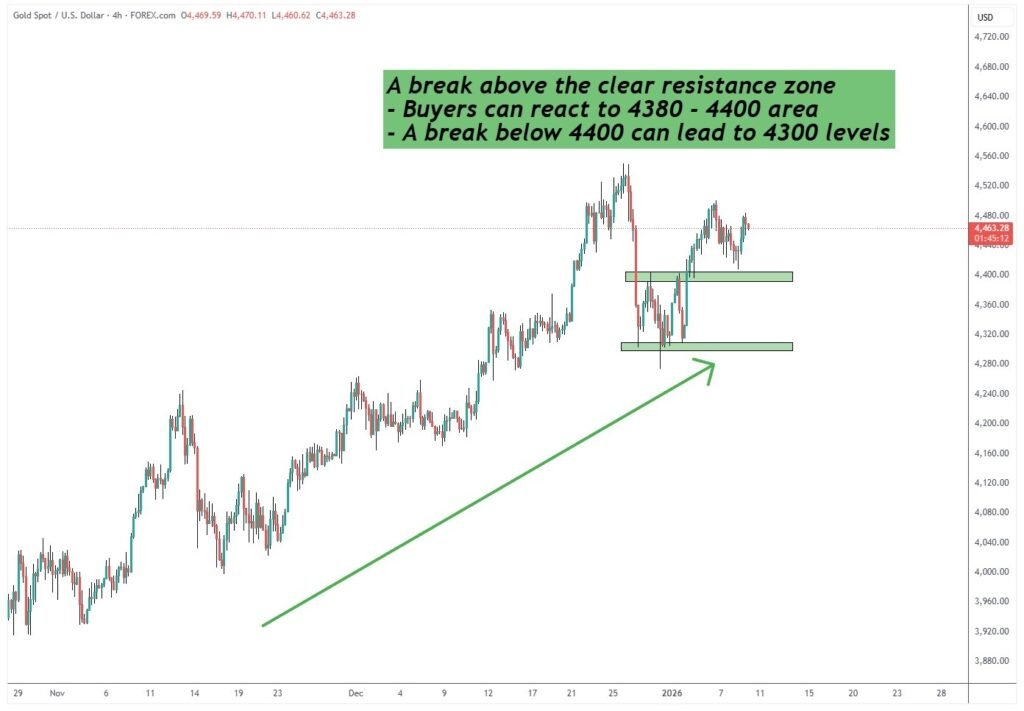
Looking at the charts shared, Gold continues to trade within a clear higher time frame uptrend. Price recently reacted from a prior support zone and is now consolidating above that structure.
As long as price holds above the highlighted demand area, buyers remain in control. A clean reaction from support opens room for continuation toward the 4500 level. Failure to hold structure exposes price toward the 4300 region.
US 500 Structure and Defined Risk Zones
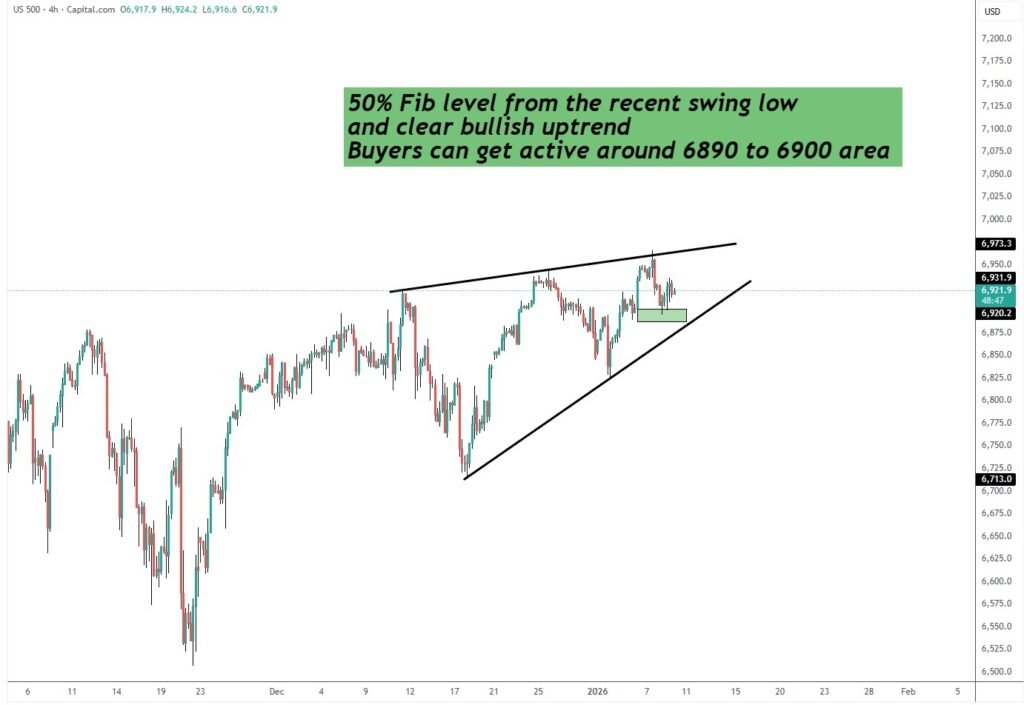
On the US 500, price continues to respect a rising channel supported by bullish market structure. The recent pullback aligns closely with the 50 percent Fibonacci retracement of the prior swing.
This retracement level is commonly where buyers step in during trending markets. The 6890 to 6900 zone stands out as an area where risk can be clearly defined rather than chased emotionally.
This is where understanding trading volatility during US market open becomes valuable. Volatility does not create structure. It reacts to it.
Macro Events Act as Triggers, Not Trends
Now add the macro layer. The US economic calendar shows multiple high impact USD releases, including labor data and inflation expectations.
These events rarely create trends on their own. Instead, they act as volatility triggers around already established technical levels. That is where most traders get caught.
Not because they were wrong.
But because they were unprepared.
Preparation means knowing your zones, knowing where you are wrong, and sizing positions so one move does not control your psychology.
A Simple Framework for Volatile Sessions
My focus remains intentionally simple during periods of elevated volatility.
Define zones before volatility hits.
Know invalidation before entry.
Size positions so emotions stay neutral.
No rush.
No panic.
No reaction trading.
This approach works across markets, whether you are trading Gold, indices, or currencies. If you want to understand how disciplined thinking applies across all financial systems, the Bitcoin Essential Course by Azad Money offers a strong foundation in risk awareness and long term perspective.
Final Thoughts Before the US Session
Volatility is not the enemy. Lack of preparation is.
When you understand trading volatility during US market open, price expansion becomes something you plan for, not something that surprises you.
These are the zones I am watching closely going into the US session.
Curious to know what levels others are tracking on Gold and indices.
Drop your views in the comments and let’s continue the discussion.