Money Narratives shape how people think about safety, investing, and trust. Learn why questioning them matters more than ever today.
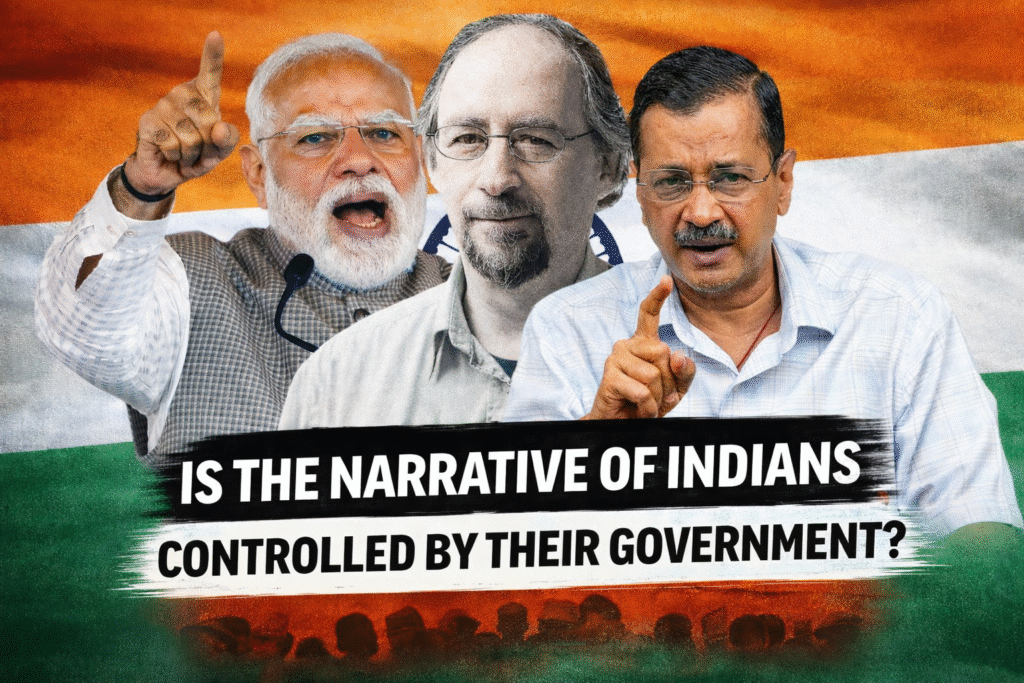
How Money Narratives Shape Beliefs
Most people believe their financial decisions are their own.
But if you look closely, many of those beliefs were given to you long before you ever questioned them. Since childhood, we are taught what “safe money” looks like. Fixed deposits are safe. Gold is security. Government backed means trustworthy.
None of these ideas are necessarily wrong. But very few people ever stop and ask where these beliefs came from. Over time, repetition turns ideas into truth. Say something enough times, and it stops being questioned.
Money Narratives in the Real World
If you live in India, you can see how narratives shape behavior in real time.
Take the 2016 demonetization as an example. Overnight, trust in cash changed. Digital payments became the default, and the collective belief around money shifted rapidly. It was not just a policy change. It was a narrative shift.
Now look at liquor policies. Every few years, new rules, reforms, and crackdowns appear. On the surface, it looks like governance. But governments also generate massive revenue from liquor taxation. So control is often not just about public welfare. It is about influence and financial flow.
When events like the Delhi liquor controversy happen, they are amplified politically. Narratives are pushed, shaped, and repeated until public perception aligns with a certain direction.
Why Money Narratives Matter More Than You Think?
This is where things get deeper.
Most people do not form opinions independently. They absorb them. Media, social pressure, and emotional storytelling play a huge role in shaping what feels true. Movies, news cycles, and public discourse influence belief systems far more than raw data does.
If everyone around you trusts banks, you trust banks. If no one you know invests in Bitcoin, you avoid it. Not necessarily because it is wrong, but because it feels unfamiliar.
That is how narratives work. They create a sense of safety, even when that safety is based on repetition rather than understanding.
Bitcoin and Breaking Money Narratives
Bitcoin enters this system from a completely different angle.
There is no central authority deciding what the narrative should be. No single entity controls the rules. The system operates on fixed supply, transparent code, and decentralized verification. Consensus is not forced. It is earned.
Even within Bitcoin, disagreements exist. But no one gets the final say. Node operators, developers, and users collectively shape the system. This makes Bitcoin uncomfortable for many people because it does not fit into the traditional framework of trust.
If you want to understand how Bitcoin works beyond narratives and headlines, the Bitcoin Essentials course breaks down the system in a clear and practical way.
Final Perspective
This is not about saying everything you were taught is wrong.
It is about asking a simple question.
Are your financial decisions really yours, or are they shaped by repeated narratives around you?
Because the biggest risk today is not volatility.
It is believing you are in control, when in reality, your thinking has been influenced all along.
Bitcoin does not ask you to trust it blindly.
It asks you to verify, question, and understand.
And maybe that is why it feels uncomfortable.
Need help building your Bitcoin strategy?
Message directly on WhatsApp.
+971 56 739 9526